PVA Wood Glue and Adhesive: A Practical Guide for Woodworking
Posted By Benjamin Howard
On 15 August 2026
Choosing the right adhesive can make a major difference in the quality and durability of a woodworking project. Whether you are repairing furniture, building cabinets, creating decorative items, or completing a DIY project, understanding how different adhesives work can help you achieve better results. PVA wood glue and PVA adhesive are popular options because they are easy to use, versatile, and suitable for many everyday applications.
What Is PVA Wood Glue?
PVA wood glue is an adhesive commonly used for joining pieces of wood. PVA stands for polyvinyl acetate, a polymer widely used in water-based adhesive formulations. Woodworkers appreciate PVA-based glue because it spreads easily, provides a strong bond on suitable wood surfaces, and is generally simple to clean while wet.
When applied correctly, pva wood glue can create a strong bond between properly fitted wooden surfaces. It is commonly used for furniture assembly, woodworking joints, cabinets, shelving, wooden crafts, and repairs.
The performance of a particular product depends on its formulation. Some products are designed primarily for indoor applications, while specialized formulations can offer improved resistance to moisture and demanding conditions.
Understanding PVA Adhesive
PVA adhesive is a broader term that describes adhesives based on polyvinyl acetate. Although many PVA adhesives are used for woodworking, they can also be suitable for paper, cardboard, crafts, fabric, and other porous materials.
This versatility makes PVA adhesive a useful product for workshops, schools, hobby rooms, and manufacturing environments. However, not every PVA formulation is designed for structural woodworking joints, so checking the manufacturer’s recommended applications is important.
The terms PVA adhesive and wood glue are sometimes used interchangeably, but the intended application and formulation can differ from one product to another.
Why Woodworkers Prefer PVA-Based Adhesives
One of the biggest advantages of pva wood glue is its practical balance between performance and ease of use. It can be applied with a brush, spreader, nozzle, or other suitable applicator, depending on the project.
PVA-based products are also generally convenient for indoor woodworking. Many have a relatively mild odor compared with some solvent-based adhesive systems. Water-based formulations can usually be cleaned more easily before they have cured.
Another benefit is their ability to form strong bonds when surfaces are properly prepared and brought into close contact.
Surface Preparation Is Essential
Even a high-quality PVA adhesive may perform poorly if the surfaces are dirty, damp, or improperly fitted. Before applying glue, remove dust, grease, loose particles, and other contaminants from the bonding surfaces.
Wood pieces should generally fit together accurately. Large gaps can reduce the effectiveness of a conventional woodworking adhesive because these products are typically most effective when the surfaces have good contact.
If sanding is required, prepare the surfaces consistently and remove sanding dust before applying the adhesive.
How to Apply PVA Wood Glue
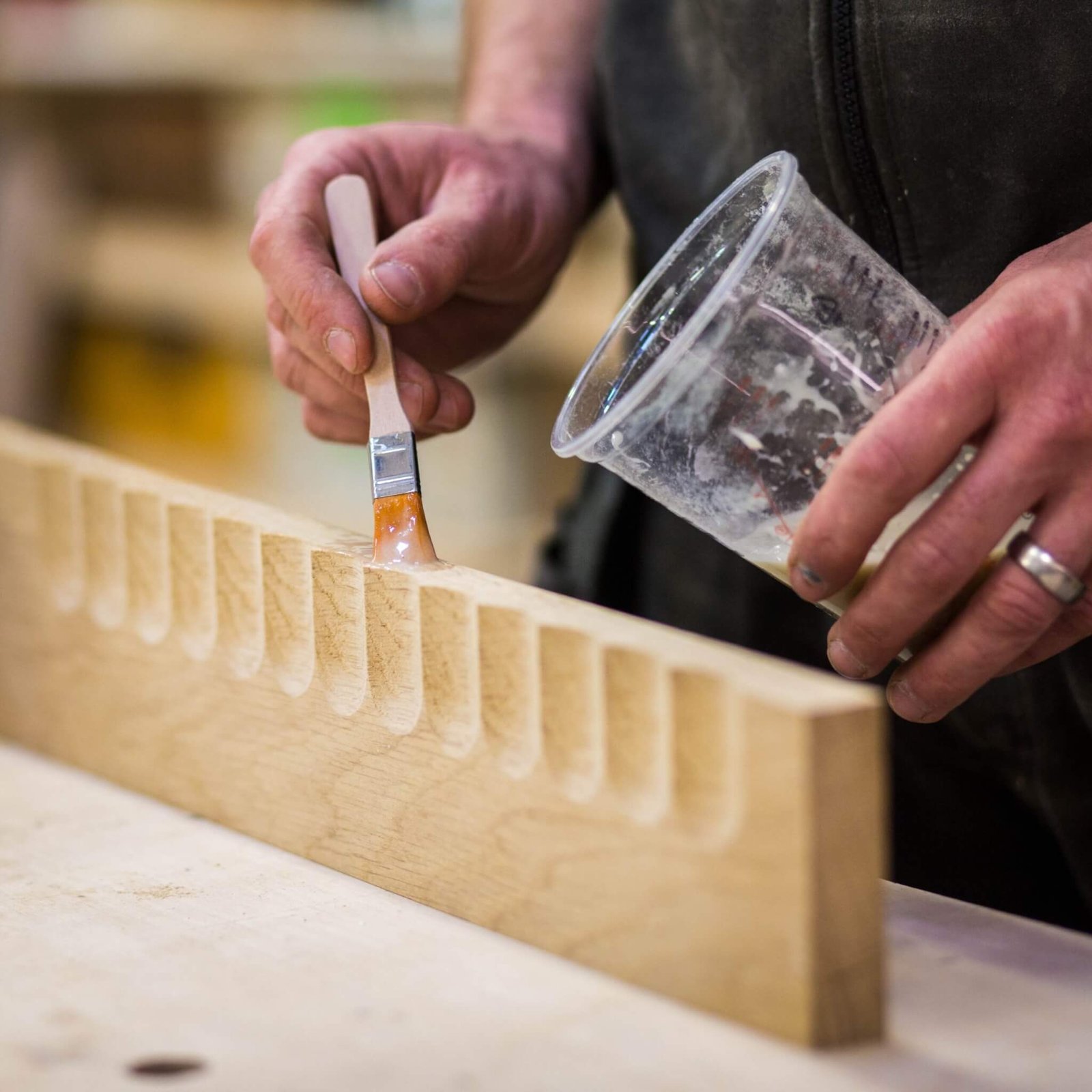
Using pva wood glue correctly is relatively straightforward. First, make sure the surfaces are clean and properly aligned. Apply an even layer of adhesive to the recommended bonding area.
Spread the adhesive consistently rather than creating unnecessarily thick pools. Bring the pieces together and use appropriate clamps when necessary to maintain firm contact.
Excess adhesive that squeezes out of the joint can generally be removed according to the manufacturer’s instructions. Avoid moving the assembly unnecessarily while the adhesive is curing.
The exact clamping and curing requirements vary between products, so always follow the manufacturer’s technical guidance.
Choosing the Right PVA Adhesive
Not every PVA adhesive is suitable for every project. When choosing a product, consider where the finished item will be used.
For indoor furniture and general woodworking, an adhesive formulated specifically for wood may be appropriate. Projects exposed to humidity or occasional moisture may require a product with a suitable moisture-resistance rating.
For craft applications involving paper or cardboard, a general-purpose PVA formulation may be sufficient. Always check the product label and technical data before using an adhesive for a demanding application.
Common Applications
PVA wood glue has many uses in woodworking and DIY projects. Typical applications include joining boards, assembling furniture, repairing wooden components, creating wooden boxes, installing trim, and producing handmade crafts.
Meanwhile, PVA adhesive can be useful in broader applications involving porous materials. Its versatility makes it popular among hobbyists, craftspeople, educators, and professionals.
The right adhesive can help create a cleaner finished project while reducing the need for unnecessary mechanical fasteners in suitable applications.
Mistakes to Avoid
One common mistake is assuming that using more glue automatically creates a stronger bond. In reality, excessive adhesive can create unnecessary mess and may not improve joint performance.
Another mistake is ignoring environmental conditions. Temperature and humidity can influence drying and curing behavior. Storage conditions can also affect adhesive quality over time.
Users should also avoid relying on appearance alone to determine whether a joint has reached its final strength. Follow the manufacturer’s recommended curing period before placing significant stress on the finished assembly.
Final Thoughts
PVA wood glue remains a practical choice for many woodworking applications because it combines convenience, versatility, and dependable bonding performance when used correctly. PVA adhesive, meanwhile, covers a broader range of water-based adhesive applications and can be useful for numerous porous materials.
The best results come from selecting a product designed for the specific job, preparing surfaces properly, applying the recommended amount, and allowing adequate curing time. Whether you are an experienced woodworker or a DIY enthusiast, understanding the characteristics of PVA-based adhesives can help you produce cleaner, stronger, and more reliable projects.
Congratulations! You've completed this blog.
You May Also Like

IntroductionThe online gambling industry in the UK has seen significant...
Najlepsze kasyna online dla graczy o wysokich stawkachGracze, Pelican Casino...
Najlepsze kasyna online z minimalnym depozytem 2026Kasyna online z minimalnym...
Najlepsze kasyna online na Ukrainie z dużymi wygranymi 2026W ostatnich...
Najlepsze kasyna online z Paysafecard dla bezpiecznych zakładówKasyna online przyciągają...
Najlepsze kasyna online 2026 z dużymi szansami na wygranąKasyna online...
Najlepsze kasyna online do gry na pieniądze na Białorusi 2026Nowoczesne...
Najlepsze kasyna online do obstawiania tenge w 2026 rokuWraz z...